A Prayer for Around the Table

Prayers around the table, everyone holding hands while keeping one eye squinty-open in the direction of the turkey or ham or turducken or tofu, is a sacred moment. Here’s a good prayer, if you’re looking for one:

Give us this day our daily bread, O Father in heaven, and grant that we who are filled with good things from Your open hand, may never close our hearts to the hungry, the homeless and the poor; in the name of the Father and the of the Son, and of the Holy Spirit. {The New Clairveaux Abbey}

Or simpler fare from yours truly:

Thanks, God. This is grand.


Like Thunder Follows Lightning

gratitude.rockwellThere are few things more subversive in this world than someone who sees grace in every corner, who chuckles easy and loves easy and has both whimsy and mirth mixed in with even their honest assessments of the way things truly are. These glad-hearted people have discovered that thankfulness is not merely a discipline but the only sane way to live in a world offering so much gritty beauty, so much possibility for love, so many joys.

These unlikely provocateurs have not caved to rose-tinted glasses or withdrawn from bitter reality. They simply know that sorrow does not finally own the day. They do not ignore the pain. Quite the opposite, their heart has grown so large that the life they know possesses the courage to see all that is wrong and yet has strength enough to gather the afflictions into itself, allowing love to tend to the wounds. They know that joy, not misery, holds the ace. And they are so very, very thankful.

“Grace and gratitude belong together like heaven and earth,” say Barth. “Grace evokes gratitude like the voice of an echo. Gratitude follows grace as thunder follows lightning.”

Bless All the Daughters

Like me, one of Miska’s true joys is to speak a blessing over others. I think I must have learned this from her. Recently, Miska wrote a blessing for women in our little All Souls community. Receive these good words as your own – and they work just as well for those of us who go by the name ‘sons.’

Blessed are you, beloved daughters of God.
Lift up your hands, your eyes, your hearts
to the Living God.
Get into that soul posture of receiving.
May you continually re-orient your Being
to what is Real;
May you have the courage and grace
to receive Life from God in whatever
astonishing and unexpected ways He sends it.
Enter into the mystery!
May you hear Jesus calling your name–
calling your name–
inviting you to rise up, come forth into life
and be unbound.
Be blessed–may it be well with your soul–
for the Lord is your God,
and He is making all the sad and broken things come untrue
and He is making all things new.
In the name of the Father, the Son, and the Spirit,
may it be so.

Sleeping Laughter

Several nights ago, a dream crossed those dim boundaries between the sleeping and the waking. I don’t know what cracked escapade my dream played for me, but something certainly struck my funny bone. I clutched my gut, laughter of the sort that pins a stitch in your side. Such a deep laughter I woke myself. My wee hour outburst startled Miska, jolting her upright, “Are you okay?” she asked groggily, patting her hand around the bed in search of me. The next morning, she told me how she hadn’t known whether I was laughing or crying.

I was laughing, most definitely laughing.

Some dreams we claw after, grasping for the fantasy or the happiness, those illusory shimmers. Some night terrors we’re desperate to forget. With this dream, I am merely grateful for whatever zaniness prodded such mirth. “Laughter is carbonated holiness,” says Anne Lamott. I may agree with Woody Allen even more: “I am thankful for laughter, except when milk comes out of my nose.”

Perhaps this is why Jesus told so many odd stories with offbeat turns and witty puns – and with so many curmudgeonly, half-witted characters. Perhaps Jesus just wanted us to break a smile or, if he could manage it, get us to belch a straight up guffaw. God, it seems, wants us to laugh. And if he must tickle us in the night to make it happen, so be it.

Nuns, Gardens and Prayer

Today, I pulled into the Kroger lot, parking near a green Toyota Tacoma pickup. As I walked toward the store, an elderly nun, with white coif and black habit, hopped into the front seat. Seated beside her was a second, more elderly, sister. They sat in that front cab so naturally that I could see them shifting into four-wheel drive and dirtying up the mud flaps with true abandon. I imagined them heading back toward the convent, with Toby Keith or Sugarland – or even better, Cash and the Avett Brothers – thumping.

My guess is that these sisters are from Our Lady of the Angels monastery, our local Trappist community tucked into the Blue Ridge foothills. Our Lady of the Angels is known for two things: prayer and gouda. Their Dutch-styled gouda is the absolute finest I’ve ever tasted, and you typically have to order it months in advance. Several Christmases ago, friends brought us a nice chunk off the 2lb gouda wheel they had purchased. I watched that wheel the rest of the evening, hoping that somehow God would be merciful and allow some small sliver to remain when the evening was done. Marvelous as the gouda is, however, the sisters want everyone to know that cheese is more their hobby than their passion. On their old order forms, they gave a reminder something like this: “Thank you for your order. We’ll get to it when we can. Our first work is prayer.”

Not that they are creating a strict dichotomy between the two. Rather, the sisters weave a rhythmic life and insist on a pace that allows even cheese-crafting to be patient and prayerful, not stressful and harried. One of the beauties of cloistered life is that (at its best) those who give themselves to it seek to carve space for holistic living where peeling potatoes and tending to the animals and compline prayers all blend into one life of joy and faithfulness, one life where even tedium is welcomed for whatever gifts it brings. They do not so much seek complete removal from the world but rather a way of creating boundaries so they can live in the world more fully, remembering the joy found in the oft-forgotten details, in the subtleties that most of us rarely notice.

Vigen Guroian, an Eastern Orthodox theologian and friend, likes to say, “I think gardening is nearer to godliness than theology.” In the garden, we dig our fingers into the grit of this world. We find ourselves immersed in the life to which we are called. Good gardening requires patience and slow attentiveness – and probably a little luck, all of which explains why I’m so awful at it. “True gardeners,” Vigen says, “are both iconographers and theologians insofar as these activities are the fruit of prayer without ceasing.”

There’s something shared between the sisters in their cheese shop and Vigen in his garden. This is something we can all share, in our labor or our craft, amid the mundane as well as the exhilarating moments. We can all seek God in the work of our hands, in the immediate space around us. We can, in “whatever we do, whether in word or deed, do it all in the name of the Lord Jesus, giving thanks to God the Father.”

I imagine two Sisters winding through the country roads the twenty miles or so back to their monastery, tapping the dashboard in harmony with the Soggy Bottom Boys. Every mile and every note a prayer.

 

Lilies, Birds and Demons

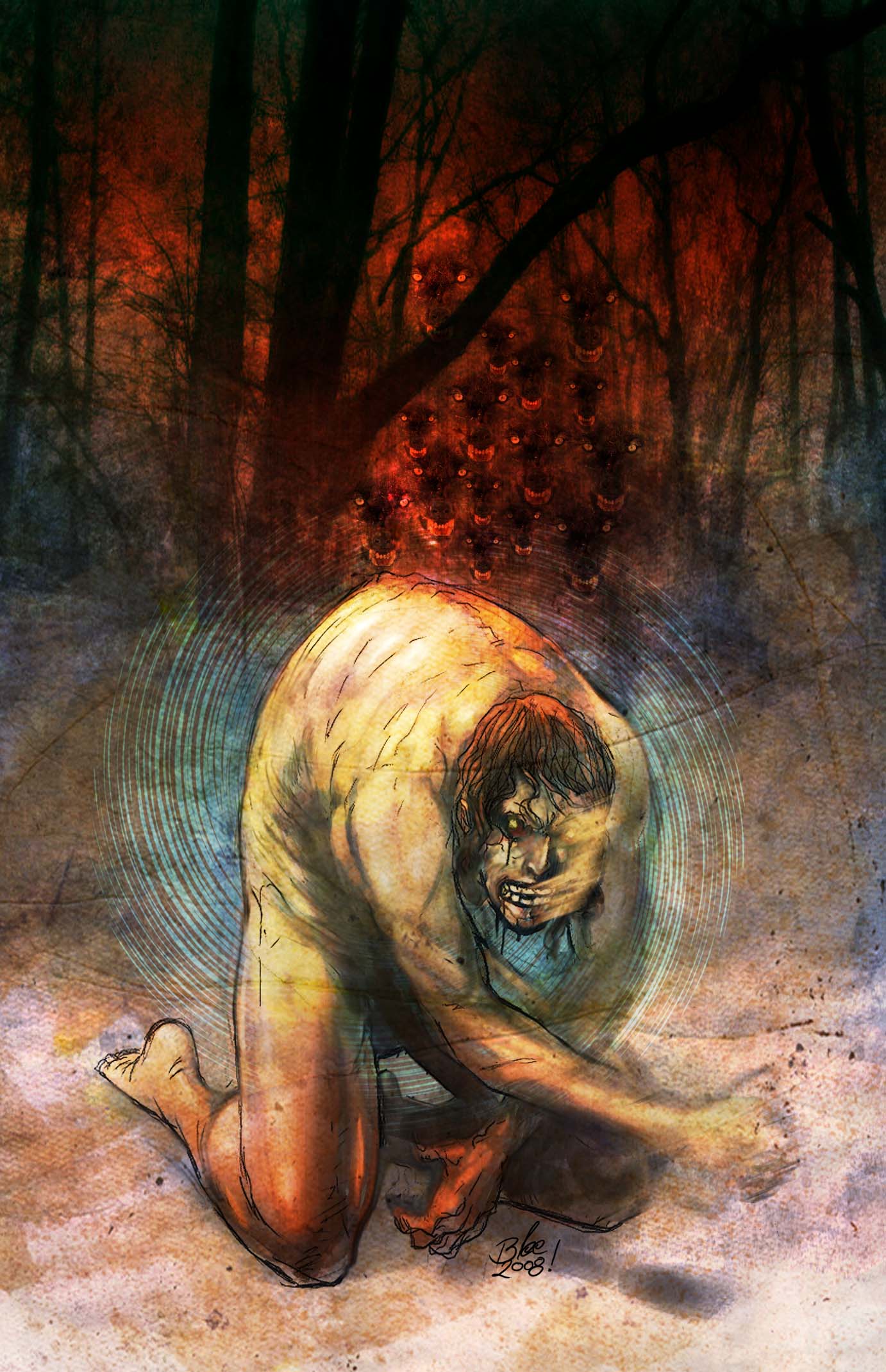
Legion_DemonSt. Luke narrates a spooky tale, just perfect for the month of October. Jesus and his merry band travel into the hill country of the Gerasenes. This country is a badland of sorts, the roaming ground for a demon-possessed madman who tears through the woods naked and rips shackles and causes general mayhem, all under the power of a legion of foul spirits. This is a character M. Night Shyamalan would love. This is the sort of beast that would keep boys and girls clutching their mother’s hand whenever they roamed beyond the outskirts of the village.

However, this ravaged man was no beast. He was a woman’s son. He once had friends, knew love. Perhaps he had children who still clung to memories of when their father’s mind was right. Perhaps their bedtime prayers asked God to watch over their dad in the woods, alone and bare, afraid and completely lost.

When the Legion saw Jesus, they flung the madman to the ground and screamed for Jesus to let them be. Have mercy on us, they raged. Don’t send us back to the awful abyss. Send us into the heard of swine.

Have mercy, what a surprising request from loathsome creatures who know nothing of kindness or love, nothing of mercy.

If you will allow me a short excurses, it is at this point in the story that my mind leaps to Jesus’ sermon on the hillside and Jesus’ beautiful lines drawing our imagination to the birds soaring through the sky and the lilies gracing the meadow. The lilies and the birds do not fret. They don’t toss and turn through the night. They are carefree in God’s provision. Don’t you believe God will be even more kind to you? Jesus asks. God is quick with abundant compassion, even for birds and flowers.

And, it seems, even for demons.

Alright, Jesus says to the horde, I won’t cast you to the Dark. Off you go, pigs it is.

Why would Jesus grant the Legion their request? Why did he enact force over them, but only so much as was necessary to free the madman from their grip? Did Jesus recall these spirits, in their prior angelic brilliance and glory, when they were free and joyful in God’s service? Jesus’ kindness, it seems, truly has no limits.

God’s care and compassion abound to bluebonnets and ravens and yes, to demons. How much more then to you, God’s fairest creature, God’s child.

Bright Eyes

Perhaps you are in a lonely place today. Perhaps your heart is heavy or burdened. Perhaps God seems only a faint hope. Perhaps a sorrowful memory or a mirky future press your soul. Perhaps you’ve begun to believe that no one truly sees, that this is the final word.

For you, dear friends, St. John of Kronstadt has a vital word:

When you are praying alone, and your spirit is dejected…remember then that God the Trinity looks upon you with eyes brighter than the sun.

Eyes brighter than the sun. Eyes of attentive love. Eyes on you.

Not Feeling Faith

ashestoashesSome of us have, for the moment at least, sufficiently made our point. We can not abide a robotic faith where difficult questions or deep anxieties are met with silence, rebuke or prayer-circle interventions. We have been worn to the existential bone with the hypocrisy we believe others demand of us when we are expected to apply our happy face and chirp a few cliches, often set to peppy tunes. We will not play the game. We will be (as we repeatedly remind ourselves and others) authentic.

The difficulty is that, in our move toward being real (whatever that means), we’ve often merely traded one false self for another false self. In our previous world, we felt there was no space for our humanness, our individuality, our emotions and inner life. To whatever degree this was the reality hoisted upon us, we are right to resist. We are whole beings, and our whole self matters. In the new world where we’ve shed these shackles, however, we are often ruled by what we feel, by whether our prayers feel vibrant or our worship feels truthful. We sit immobilized when we hear the Psalmist’s invitation to “praise the Lord all [our] life.” Praise is not an emotion; it is a declaration.

There are many days when I don’t feel the electricity of love for Miska (or she for me), but I announce my love to her, live my love toward her, nonetheless. And I’m not being inauthentic. Quite the opposite, I’m demonstrating that my love runs far deeper than my whims or confusions. I have promised fidelity. This is the ground of truth. When I don’t feel love’s energy, I should pay attention in order to keep a check on the state of my heart toward her, but this poverty doesn’t define what is true. Some days, my feelings are simply going to have to figure out how to keep up.

Our feelings, all the complexities of our story and our interior selves, are affirmed in the Psalms, honored in the prayers of the prophets and apostles, and blessed in the Incarnation where Divinity became fully human. However, our feelings are not God. Only God is God. As Barth said, “Let us set aside our investigation of God. God searches us. Our mind is never right.” To give no heed to what we feel or think or the many ways we struggle and plod along is to dishonor the God who created us. However, to give ultimate authority to these realities is to bow at the feet of another god.

Feelings are important in judging the condition of our heart or how we are engaging God and others. However, they don’t always tell us the truth about ourselves, God or others. Attentiveness to our feelings is essential to tell us where our heart is, but they are not always trustworthy to tell us where God is. Only God can do that.

This is why we pray with the Church. This is why we surrender to the stories of our God’s actions across history and geography. This is why we break bread with friends and laugh and dance under the moon and become peacemakers and feast with the poor. This is why we hope for good and commit ourselves to joy and why we have plenty of space for our tears. We do all this because God has come to us in Jesus Christ, and Jesus has taught us that this life is the life God has for us. Whether we feel it or not.

Shine

We hadn’t even moved into our townhouse, and I’d already lost my bid for the third-story room, the one with the big window facing Carter’s Mountain. It would have been a great little studio, a tucked-away corner for my books and graphite pencils and framed Berry poetry which serves as my credo, until the day I build my writing hut. The words were waiting to spill from that perch; but we have two boys who, I guess, need a place to sleep and a floor on which to toss their clothes. I’m convinced the loss of these few square feet is the reason I’ve yet to write the Great American Novel, but such is life.

I’ve landed down the stairs, just below the cranny that slipped away. It’s half-time office, half-time guest suite. I still have a window, and the window still faces Carter’s. Standing there, watching east, I notice how the fog burrows into the ridge, until the sun arrives to lick the fog away. A few mornings ago, I found myself reading to the mountain. I don’t believe the granite mound was listening, but I’m used to reading while no one’s paying me any attention. The text was one of the day’s Psalms, and I didn’t realize until mid-sentence that I was recounting to the sun and the mountain their own story:

The Mighty One, God, the Lord,
   speaks and summons the earth
   from the rising of the sun to the place where it sets.

God summons the earth. God coaxes the sun from its slumber. Like Jesus woke Lazarus, like I woke (and woke again) my sons early this morning, like those many times God nudges me from lethargy, weariness or fear – God says, “Rise and shine.”

Whatever your place this day, God summons you, as he summons the earth, as he summons all the fair creatures of this world. Arise. Shine. We’re all waiting to see your splendor.


Be Easy

Straining on the toilet
we learn how
the lightning bug feels. {Kooser and Harrison}

Wyatt, our ten-year-old, has moved into the big leagues, the upper elementary school where they move from class to class through cavernous halls and (because apparently the place was built before the advent of lockers) lug pounds of massive textbooks. The poor kids look like Notre Dame’s hunchback. The foreboding buildings can be a bit of a zoo because every 5th and 6th grader in the city calls this home for two years. It is a good school and Wyatt was eager, but there is an intimidation factor. He doesn’t know many kids, and the transition includes a period where you flounder. Just wait, I keep thinking, middle school is a whole other level of awkward.

Today, Wyatt has his first presentation. Wyatt has to stand in front of his class and tell a few strands of his story and explain his “artifact box.” The box contains several of his favorite things: a book (Hunger Games), a video game (NCAA football, 2006 – because his dad’s too cheap to get anything up to date) and a piece alluding to Greek gods because this boy loves an epic tale, particularly if swords and intrigue are involved.

Wyatt has been nervous since Friday. He’s told us multiple times his vision of a best case scenario: I hope I don’t go first and I hope the person before me does a bad job – but no one laughs at them — and then I won’t feel so much pressure. Not exactly generous, but I see where he’s coming from.

I explained the trick every father since Methuselah has passed down to their son, the one about imagining everyone in their underwear. That only messed him up more. I took a a second swipe. “Wyatt, all your friends in your class are in the same boat you’re in.”

“But dad,” he answered. “I don’t have many friends in my class. Only two.”

The year will go well for Wyatt, as will the presentation I’m sure. He’ll have more friends at the end than he has now at the beginning. Still, he has to walk this path. We all do. It’s hard to move into new places. It’s hard to carry the loneliness and the fear, the anxiety about who you are and whether you belong. And my experience tells me you can be forty and still live these questions.

This morning, we read (from The Message) Jesus’ words in Luke 7: Be easy on people. I love that. We have no idea what the person we’re meeting today carries with them, but we do know (if we’ve paid attention) what we have carried — and what we sometimes carry even now. We know what it is to strain at our life. We know what it is to be alone or misplaced or fearful. We know that there are times (many) when we need someone to pause for friendship, someone to simply go easy on us.

Today, I find myself praying for Wyatt, Let someone be easy. And I’m praying the same for you. Why don’t we all just lower our guard and open our ears, drop our sarcasm and our critique. Why don’t we all just go easy on each other.

Top